Why Hair Turns Orange or Brassy After Highlights in Marbella
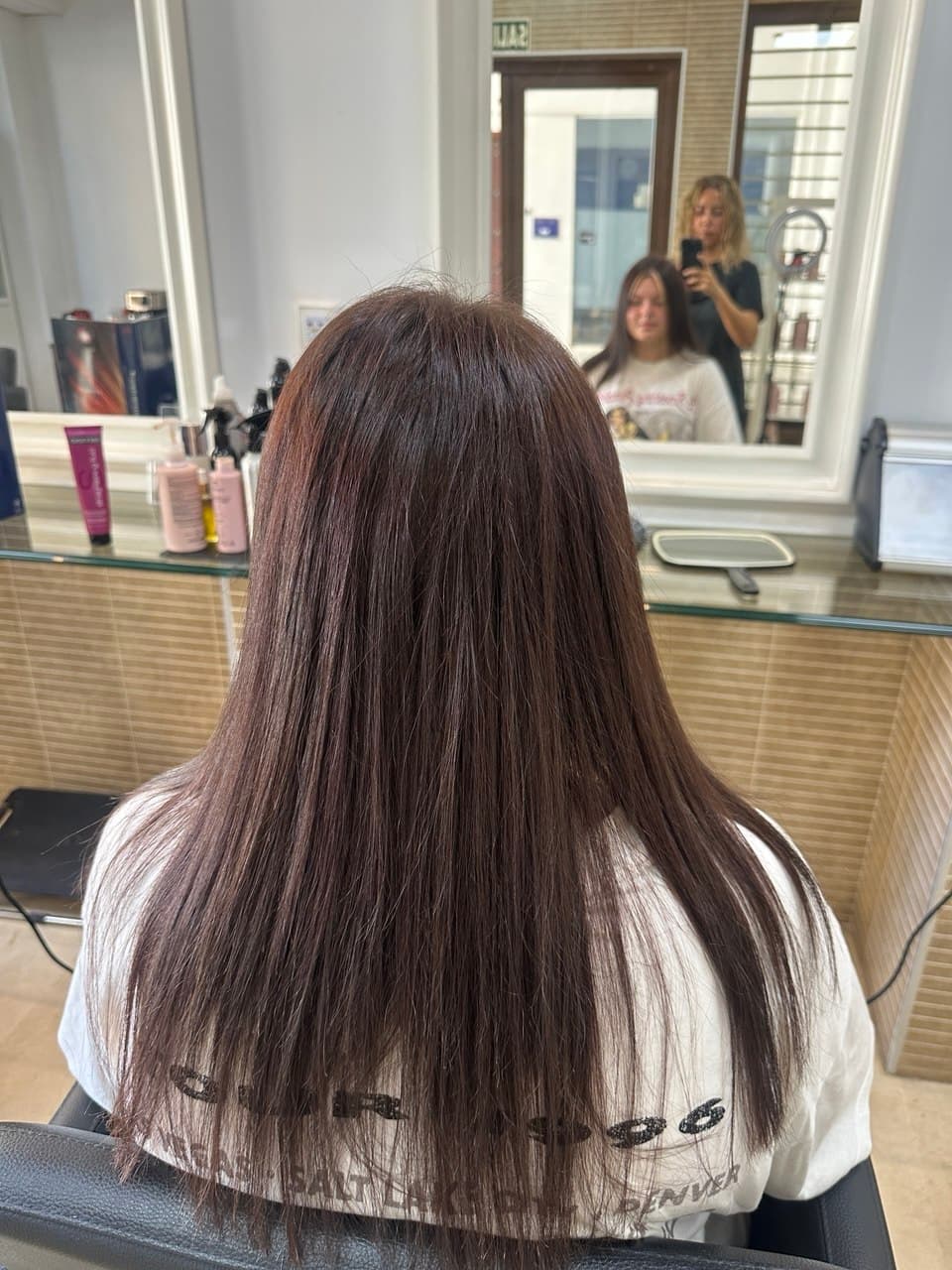
Highlights in Marbella turning orange or brassy isn't always a toner problem. In many cases, the real issue starts much earlier — with understanding the natural base, choosing the appropriate colour level and lifting the hair far enough to achieve the desired result.
Beautiful hair colour isn't simply about choosing a lighter shade. It is about understanding the natural base underneath the hair, lifting it to the right level and then selecting the appropriate colour or toner to refine the final result. After more than 25 years working with hair colour, I see this distinction every day.
Why Does Natural Hair Turn Orange?
One of the most common colour problems I see in naturally darker hair is unwanted orange or copper tones. Every person's natural base is different. The correct colour needs to be selected according to that individual starting point rather than simply choosing a lighter colour number and expecting the same result on every client.
When the chosen colour does not take the hair to the appropriate level, warm or orange tones can remain visible. If the same process is then repeated several times, the result can become increasingly uneven, porous and distressed, particularly through the lengths and ends. This is one reason I see so much orange or unbalanced colour in hair around Marbella. It isn't necessarily because the natural hair is difficult to work with — often, the starting base simply hasn't been assessed carefully enough.
The Correct Level Matters More Than Simply Going Lighter
When colouring or lightening hair, the goal isn't simply to make it lighter. The important question is how light that particular hair needs to become to achieve the final colour we want. Different natural bases expose different underlying pigments as the hair is lifted — depending on the starting level, these can include red, red-orange, orange, yellow-orange, yellow or pale yellow.
The final colour needs to be built around the level that has actually been achieved. If the hair is sitting at an orange level but the desired result requires a cleaner blonde foundation, applying a lighter-looking colour over it will not necessarily solve the problem — the hair first needs to reach the appropriate level of lift.
Why Do Highlights Sometimes Look Orange or Yellow?
The same principle applies to highlights. When I look at some highlighted hair, I can see that certain sections have simply not been lifted far enough to achieve the desired result. Some highlights are left at an orange base, while others reach a yellow base. In some cases, depending on the condition and previous colour history, the hair could have been lifted to a cleaner and lighter level. Creating beautiful highlights isn't simply about placing lightener on the hair — it is about knowing how far each section needs to be lifted while constantly considering the condition and history of the hair.
The Toner Cannot Always Fix an Incorrectly Lifted Base
This is one of the most important things to understand about brassy highlights. A toner is designed to refine and neutralise the colour of the underlying level that has already been achieved. It cannot always compensate for hair that simply hasn't been lifted far enough. For example, if a highlight has been lifted to a strong orange base, applying a toner may temporarily make the colour appear cooler and more balanced, but if the desired result requires a much lighter blonde foundation, the underlying level is still too dark. A toner can change the tone, but it cannot turn an orange level into a pale blonde level — which is exactly the distinction L’Oréal Professionnel's colourist education draws between the lifting stage and the toning stage. That is why the lifting stage is so important.
Why Does the Orange Come Back After a Few Washes?
This is something I see very often. A client may leave the salon with a beautiful-looking colour because a toner or colour has been applied over an orange or yellow underlying base. Initially, the result can look much cooler and more balanced. After several washes, however, the toner gradually fades and the underlying bleached base becomes visible again. The client may think the toner didn't work, but sometimes the real issue is that the hair underneath was never lifted to the correct level in the first place — the toner was temporarily controlling the warmth rather than correcting the underlying foundation.
This Is Why the Initial Lift Is So Important
When I work with highlights or colour, I think about the final result before applying the product. The question isn't simply which toner to use — it's what level the hair needs to reach before I can create the colour we actually want. The hair needs to be lifted carefully and appropriately for its condition. Once the correct level has been achieved, the appropriate toner or colour can then be selected to refine the result, creating a much more controlled and balanced outcome.
Orange and Yellow Need Different Approaches
Not all brassiness is the same. If the underlying pigment is orange, a blue-based tone may be appropriate to help neutralise it. If the underlying pigment is yellow, violet-based tones are generally more suitable. But the formula should never be chosen simply because the hair "looks brassy" — the colourist needs to assess the actual level, underlying pigment, porosity, previous colour and desired result. This is why professional toning is much more than simply applying purple shampoo or a standard toner to every blonde client.
Marbella Hair Has Its Own Challenges
Living in Marbella can also affect how colour behaves over time. Strong sun exposure, sea water, swimming pools, frequent washing and heat styling can all influence coloured and highlighted hair. When the toner gradually fades, the underlying warmth can become more visible, particularly when the original colour was already sitting on an orange or yellow base. Good colour maintenance in Marbella is therefore not only about keeping the tone fresh — it is also about protecting the condition of the hair and avoiding unnecessary repeated chemical processing.
How to Avoid Repeated Colour Damage
If hair has already been coloured several times, repeatedly applying more colour over the lengths isn't always the best solution. The more important question is why the colour keeps becoming uneven in the first place. A professional colour assessment should consider:
- Your natural base and previous colour history
- Existing highlights and the current level of lift
- Underlying orange or yellow pigment
- Hair porosity and the condition of the lengths and ends
- Your desired final colour
Only after understanding these factors can a colourist decide whether the best option is further lifting, toning, colour adjustment or simply maintaining the existing colour. Sometimes the best colour correction isn't to do more to the hair, but to stop repeating the process that caused the imbalance.
How Can You Maintain Your Colour After Toning?
Once the correct colour has been achieved, maintenance becomes much easier. I normally recommend using products designed for colour-treated hair, avoiding unnecessary frequent washing, using heat protection when styling, protecting your hair from prolonged sun exposure, rinsing after swimming in the sea or pool, using purple shampoo when appropriate rather than automatically using it every wash, and returning for professional toning or colour maintenance when the tone begins to change.
If the hair has become dry or weakened through previous lightening, its condition should also be addressed as part of the overall colour plan. At The Lounge Marbella, Hair Botox and keratin treatments are available following a consultation, with the treatment recommended according to the condition and needs of your hair.
When Should You See a Colourist?
If your highlights repeatedly turn orange, or your colour looks beautiful immediately after the appointment but becomes brassy after a few washes, it is worth looking beyond the toner. Ask whether your hair was actually lifted to the correct level for the colour you wanted — if not, repeatedly applying another toner may only provide a temporary solution. A professional colourist can assess the underlying base and determine whether the hair needs further lifting, a different toning approach or simply a better maintenance plan.
Book a Colour Consultation in Marbella
At The Lounge Marbella, I don't believe in using the same colour formula for every client. Your natural base, previous colour, hair condition and desired result all determine how your hair should be treated. After more than 25 years working with colour, I have learned that beautiful blonde and highlighted hair starts with getting the foundation right — the hair needs to be lifted to the appropriate level first, and only then can the correct colour or toner be used to create the final result.
If your highlights have become orange or brassy, or you're considering a new colour, book a consultation by WhatsApp and I can assess your hair before deciding on the right approach. See the price list or gallery to see our work.
Frequently Asked Questions
Why does my natural hair turn orange when I try to make it lighter? Natural hair contains underlying warm pigments. When darker hair is lightened, orange and yellow pigments can become visible. The correct colour and lifting process need to be selected according to your natural starting base.
Why do my highlights turn orange after a few washes? If a toner has been applied over an orange or yellow underlying base, the hair may initially look cooler and more balanced. As the toner fades through washing, the original underlying warmth becomes visible again.
Can toner fix orange hair? A toner can help neutralise unwanted warmth, but it cannot always compensate for hair that hasn't been lifted to the required level. If the underlying base is too dark or orange for the desired result, further controlled lightening may be necessary.
Why are some highlights yellow while others are orange? Different sections of hair can lift to different levels depending on the natural base, previous colour, hair condition and application. This is why highlights sometimes require different toning approaches across the head.
Can purple shampoo fix orange highlights? Purple shampoo is primarily designed to help control yellow tones and is generally less effective against strong orange tones. If the hair is significantly orange or uneven, a professional colour assessment is a better approach.
How long does a toner last? The longevity of a toner varies depending on the hair's condition, porosity, washing routine, products and exposure to sun, sea water and swimming pools. As the toner fades, the underlying colour becomes more visible.
What is the most important thing when creating beautiful blonde highlights? Getting the lifting stage right. The hair needs to reach the appropriate level for the desired final colour, and once that foundation has been achieved, the colourist can select the appropriate toner to refine the result.
Orange or brassy hair isn't always a toner problem. Sometimes the real issue begins much earlier — with the natural base, the level of lift and the decision about what colour the hair needs to reach before toning. When the foundation is correct, the final colour becomes easier to control, more balanced and more beautiful. Book ahead by WhatsApp and let's start with your hair, your colour history and the result you want to achieve.

Written by Afsaneh Farahmand, a Marbella colourist and hair specialist with 25 years of professional experience.